Veterinary diet dog food is not something you grab off the shelf because the bag looks healthy. These are therapeutic formulas from Hill's Prescription Diet, Royal Canin Veterinary Diet, and Purina Pro Plan Veterinary Diets, each built around a specific condition like kidney disease, urinary crystals, food sensitivities, or a stubborn sensitive stomach. We looked at real purchase volume, review counts, star ratings, and the actual ingredients and guaranteed analysis behind each formula to rank the options below, focusing on the diets dog owners are buying and reordering most often. Prices here range from about $13 for a small treat bag to nearly $150 for a large bag of a specialty formula, and portion size matters more here than with regular kibble because most of these diets are meant to be fed as the dog's only food. This is not veterinary advice, and nothing on this list should replace an actual diagnosis or a conversation with your vet about what your dog needs. Use this guide to see what is out there, compare the details side by side, and bring the names that fit your dog's situation to your next appointment.
Short answer: If your dog needs a widely used, vet-formulated urinary diet, Hill's Prescription Diet c/d Multicare Urinary Care Dry Dog Food (ASIN B00X6LB5IG, $57.99, 4.7 stars, over 2,200 reviews) is the top pick here based on demand and ratings. If you want to try a Royal Canin gastrointestinal formula without committing to a large bag, Royal Canin Veterinary Diet Canine Gastrointestinal LF Low Fat (ASIN B00LBT2Z3Y, $45.59, 4.4 stars) is the best value pick at a smaller 6.6 pound size. Both are therapeutic diets meant to be used with veterinary guidance, not picked on price alone.
Benefits Helps Lower Concentration Of Building Blocks For Bladder Stones
Best for Urinary Care
Breed size All
Weight 8.5 Pounds
Hill's Prescription Diet c/d Multicare Urinary Care Dry Dog Food, Chicken, 8.5 lb Bag leads this roundup with over 1,000 bought in the past month and about 2,200 reviews at 4.7 stars, the strongest demand and rating combination on this list. At $57.99, it is formulated to help lower the concentration of building blocks for bladder stones and supports urinary health with a chicken-based recipe. It is one of the smaller Hill's bag sizes, which makes it easy to start a dog on it without committing to a huge bag right away.
Best for: Dogs managing urinary crystals or stones under a vet's care
Pros
Highest combined demand and rating in this roundup
Formulated to support urinary health and reduce stone-forming minerals
Chicken flavor most dogs accept readily
8.5 lb size is manageable to start a trial
Cons
Smaller bag means more frequent reorders for larger dogs
Not suitable for dogs with a chicken allergy
Typically requires veterinary confirmation of a urinary diagnosis
Bottom line: The best-selling, best-reviewed pick here for urinary health, and a reasonable one to bring up first with your vet.
Hill's Prescription Diet i/d Low Fat Digestive Care Dry Dog Food, Chicken, 8.5 lb Bag sits at 4.7 stars from around 2,000 reviews with 1,000 units bought last month, at $61.99. It is a low-fat formula formulated to support digestive health and balance for dogs with a sensitive stomach or pancreatitis history. The 8.5 lb bag size makes it easy to see how a dog responds before moving to a larger size.
Best for: Dogs with sensitive stomachs, pancreatitis history, or general digestive upset
Pros
Strong review base backing its digestive claims
Low fat content eases digestion for sensitive stomachs
High demand shows steady repeat purchases
Manageable trial size
Cons
Chicken-based, not ideal for poultry-sensitive dogs
Smaller bag runs out quickly for bigger dogs
Bottom line: A dependable, low-fat digestive formula with one of the largest review counts on this list.
Benefits Supports Kidney Health And Maintains Muscle Mass
Best for Kidney Care
Breed size Medium
Weight 8.5 Pounds
Hill's Prescription Diet k/d Kidney Care Dry Dog Food, Chicken, 8.5 lb Bag is rated 4.6 stars from about 2,000 reviews, with 1,000 bought last month at $56.99. It is formulated to support kidney health and help maintain muscle mass, and includes an Enhanced Appetite Trigger aimed at dogs who go off their food as kidney function declines. The ActivBiome+ Kidney Defense blend is built into the recipe to further support the kidney-focused approach.
Best for: Dogs diagnosed with chronic kidney disease
Pros
Formulated to ease kidney workload and support muscle mass
Appetite-trigger technology helps dogs with reduced kidney appetite
Large review base at a strong rating
Reasonably priced for the bag size
Cons
Reduced protein levels are only appropriate with a confirmed kidney diagnosis
8.5 lb bag is small for multi-dog or large-breed households
Bottom line: The most reviewed kidney-support option here, built specifically for dogs whose kidneys need less protein and phosphorus to process.
Benefits Promotes Digestive Health And Firm Stools
Best for Allergy Relief, Skin And Coat
Breed size All
Weight 25 Pounds
Hill's Prescription Diet z/d Skin/Food Sensitivities Dry Dog Food, Hydrolyzed Chicken, 25 lb Bag is rated 4.7 stars from about 1,600 reviews, with 1,000 bought last month at $135.99. Its highly hydrolyzed chicken protein and ActivBiome+ Digestion blend are formulated to help manage food sensitivities while supporting skin, coat, and digestive health. The larger 25 lb bag size fits dogs on a long-term elimination or maintenance diet.
Best for: Dogs with diagnosed food allergies or chronic skin issues
Pros
Hydrolyzed protein is a standard approach for hard-to-place food allergies
Large 25 lb bag is better value for bigger dogs or multi-dog homes
Formulated to support both skin and digestive health together
Nearly 5-star rating across 1,600 reviews
Cons
One of the pricier bags in this roundup
Hydrolyzed formulas can smell and taste different, so some dogs need time to accept it
Bottom line: A well-reviewed hydrolyzed protein diet for dogs whose immune system reacts to standard proteins.
Benefits Helps Firm Loose Stool In 24 Hours, Reduces Recurrence, Promotes Regularity, Supports Microbiome Health
Best for Sensitive Stomach
Breed size Medium
Weight 27.5 Pounds
Hill's Prescription Diet Gastrointestinal Biome Digestive/Fiber Care Dry Dog Food, Chicken, 27.5 lb Bag is the highest rated pick in this roundup at 4.8 stars from about 1,100 reviews, with 1,000 bought last month at $144.99. It is formulated to help firm loose stool, reduce recurrence, and support the gut microbiome, using ActivBiome+ technology, added omega-3 fatty acids, and a prebiotic fiber blend. The large 27.5 lb bag suits dogs on a long-term digestive management plan.
Best for: Dogs with chronic loose stool or microbiome imbalance
Pros
Highest star rating of any pick on this list
Formulated with a prebiotic blend to support long-term microbiome health
Large bag size is efficient for ongoing feeding
Strong recent demand at 1,000 bought last month
Cons
One of the more expensive bags here
Large size is a bigger commitment before you know if it agrees with your dog
Bottom line: The top-rated formula in this roundup, built around long-term gut microbiome support.
Benefits Manages Multiple Health Conditions, Supports Weight & Urinary Health
Best for Multibenefit
Breed size All
Weight 27.5 Pounds
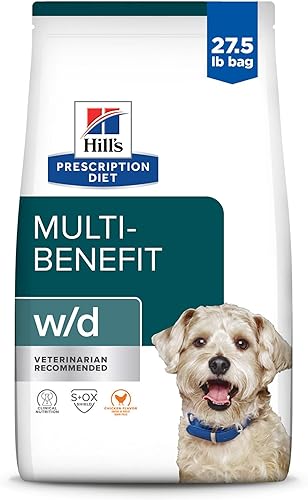
Hill's Prescription Diet w/d Multi-Benefit Digestive/Weight/Glucose/Urinary Management Dry Dog Food, Chicken, 27.5 lb Bag is rated 4.7 stars from about 1,400 reviews, with 700 bought last month at $133.99. It is a low-calorie formula formulated to help manage multiple overlapping conditions at once, including digestive health, weight, glucose regulation, and urinary health. The large bag size fits dogs who need this combination diet as a long-term food.
Best for: Dogs managing weight plus urinary or glucose concerns together
Pros
Addresses four overlapping conditions in one formula
Low calorie content supports weight management alongside other issues
Strong 4.7 star rating across a large review base
Efficient bag size for long-term feeding
Cons
A broad-spectrum formula can be less targeted than a single-issue diet
Needs veterinary confirmation that it fits your dog's specific combination of conditions
Bottom line: A practical pick when a dog has more than one overlapping condition rather than a single, isolated issue.
Hill's Prescription Diet Metabolic + Mobility, Weight + Joint Care Dry Dog Food, Chicken, 24 lb Bag is rated 4.7 stars from about 829 reviews, with 700 bought last month at $133.99. It uses a synergistic blend of ingredients formulated to support weight loss and joint health together, which is useful for dogs carrying extra weight that is also straining their joints. The 24 lb bag size supports long-term feeding for larger dogs.
Best for: Overweight dogs also dealing with joint stiffness or reduced mobility
Pros
Combines weight management and joint support in one formula
Strong recent demand and a high rating
24 lb size suits larger or multiple dogs
Formulated for dogs carrying extra weight that affects mobility
Cons
One of the pricier bags in this roundup
Not a substitute for a dedicated joint supplement in more severe cases
Bottom line: A solid dual-purpose pick for dogs whose extra weight is affecting their joints.
Benefits Supports Digestive Health And Settles Upsets.
Best for Sensitive Stomach
Breed size Medium
Weight 9.38 Pounds
Hill's Prescription Diet i/d Low Fat Digestive Care Wet Dog Food, Rice, Vegetable, and Chicken Stew, 12.5 oz Cans, 12-Pack is rated 4.5 stars from about 678 reviews, with 1,000 bought last month at $65.99. The low-fat stew is formulated to support digestive health and settle stomach upsets, using ActivBiome+ technology and a prebiotic fiber blend. The stew format adds moisture that can help dogs who need more hydration or extra encouragement to eat.
Best for: Dogs with digestive upset who do better on wet food or need more hydration
Pros
Highest recent demand among the wet options in this roundup
Stew format adds moisture for dogs needing more hydration
Low fat and prebiotic blend formulated for digestive support
12-pack is convenient for daily feeding
Cons
Canned food costs more per calorie than dry kibble
Smaller cans mean more packaging to store and recycle
Bottom line: The top wet-food pick here, with real demand behind its digestive-support claims.
Benefits Supports Digestive Health, Low Fat, Antioxidant-Rich, Aids In Pancreatitis And Hyperlipidemia Management
Best for Digestive Health
Breed size All
Weight 6.6 Pounds
Royal Canin Veterinary Diet Canine Gastrointestinal LF Low Fat, 6.6 lb is rated 4.4 stars from about 666 reviews, with 300 bought last month at $45.59, the lowest price per bag among the top digestive formulas in this roundup. It is a low-fat, antioxidant-rich formula formulated to support digestive health and help manage pancreatitis and hyperlipidemia, and it carries a no-added-antibiotics claim. The smaller 6.6 lb size makes it an easy formula to trial before committing to a bigger bag.
Best for: Owners who want to try a Royal Canin gastrointestinal formula without committing to a large bag
Pros
Lowest price per bag among the top digestive picks here
Smaller size lets you trial the formula before buying a larger bag
Formulated to help manage pancreatitis and hyperlipidemia
Solid review base at 666 reviews
Cons
Smaller bag means a higher long-term price per pound
Not the highest-rated option in its category
Bottom line: The most affordable way to trial a vet-formulated digestive diet before scaling up to a bigger bag.
Hill's Prescription Diet t/d Dental Care Small Bites Dry Dog Food, Chicken, 5 lb Bag is rated 4.5 stars from about 626 reviews, with 500 bought last month at $40.99, the lowest price of any dry food in this roundup. Its triple-action fiber matrix kibble is formulated to help reduce plaque and tartar, support gum health, and freshen breath, and the formula is VOHC accepted. The small bites size is built for small and toy breed mouths.
Best for: Small and toy breed dogs prone to plaque and tartar buildup
Pros
VOHC-accepted dental formula
Triple-action fiber matrix kibble is formulated to help scrub teeth while chewing
Small bites size fits small and toy breeds
Lowest price point of the dry foods in this roundup
Cons
5 lb bag is small for larger dogs and needs frequent reordering
A dental formula alone does not replace brushing or professional cleanings
Bottom line: An affordable, VOHC-accepted way to work dental support into a dog's regular meals.
Veterinary diet dog food, sometimes called a prescription diet, is formulated to manage a specific health condition rather than to feed a healthy dog day to day. Hill's calls its line Prescription Diet, Royal Canin calls its line Veterinary Diet, and Purina calls its line Pro Plan Veterinary Diets, but the idea across all three is the same: the nutrient levels, protein source, and fiber content are adjusted for one job, like easing a kidney's workload or calming a reactive gut. That is different from an over-the-counter diet labeled sensitive stomach or weight control, which is formulated for general wellness rather than a diagnosed condition. Many of these diets restrict or boost specific nutrients such as protein, phosphorus, or fat in ways that would not make sense for a healthy dog. Because of that, these foods are almost always sold with the expectation that a veterinarian has confirmed the diagnosis first. Think of this category as a tool your vet reaches for, not a lifestyle upgrade you choose on your own.
Matching the Diet to the Actual Health Issue
The fastest way to narrow this list is to match the specific use listed on a diet to what your vet has actually diagnosed. Kidney formulas like Hill's k/d Kidney Care are lower in protein and phosphorus to ease strain on the kidneys. Urinary formulas like Hill's c/d Multicare and Royal Canin Urinary SO are formulated to manage mineral concentration in urine and target crystal and stone formation. Digestive and gastrointestinal formulas, including Hill's i/d and Royal Canin Gastrointestinal, use easily digestible protein and controlled fat for dogs with sensitive stomachs or pancreatitis. Hydrolyzed protein diets like Hill's z/d break protein down small enough that a reactive immune system is less likely to flag it, which is a common approach for food sensitivities. Weight and joint formulas, such as Hill's Metabolic + Mobility, target calorie intake and joint support together for dogs carrying extra weight. Picking by condition first, and brand second, keeps you from paying for benefits your dog does not need.
Dry, Wet, or Both
Dry kibble makes up most of the veterinary diet market and tends to be the more affordable option per calorie, which matters since these bags can run well over $100 for a large size. Canned and stew-style wet formulas, like Hill's i/d Low Fat Digestive Care Wet Dog Food, add moisture that can help dogs who need more hydration, such as those managing urinary or kidney conditions, or dogs recovering from illness who need extra palatability to keep eating. Some owners mix a small amount of the wet version into the dry kibble to encourage a reluctant eater without changing the underlying formula. If your dog is a picky eater or recovering from a procedure, the canned or stew versions of a formula are worth asking your vet about even if you plan to feed dry day to day. Whichever form you choose, sticking to one consistent diet type makes it easier to tell whether the food is actually working. Switching between forms too often can muddy that picture.
Why a Vet Needs to Sign Off First
Several listings in this roundup are explicitly marked as requiring a veterinarian's prescription or authorization before purchase, and that is not a formality. These diets adjust nutrient levels in ways that can help a dog with a diagnosed condition and can be unhelpful for a dog without that condition. A kidney or hydrolyzed protein diet fed to a healthy dog does not add extra protection, it just changes their nutrition without a reason. Your vet is also the one who can confirm the right diet for your dog's specific bloodwork, weight, and history, and can catch a case where two conditions overlap and need a combination formula like Hill's w/d Multi-Benefit. This guide is meant to help you compare what is available and bring specific product names into that conversation, not to replace it. If a listing does not mention a prescription requirement, it is still worth running past your vet before switching a dog with an existing health issue.
Portion Size, Price, and Long-Term Cost
Because most veterinary diets are meant to be fed as the dog's only food, portion size and bag size matter more than they do with a regular food you might supplement with treats or toppers. An 8.5 pound bag of Hill's k/d Kidney Care runs about $56.99, while a 27.5 pound bag of a similar Hill's formula can run over $130, so the larger size is usually the better per-pound value once your vet confirms the diet is a long-term fit. Smaller bags and trial-size options, like Royal Canin's 6 to 6.6 pound bags, are worth choosing first if you are not yet sure a dog will accept or tolerate the new food. Wet food and treats, such as Royal Canin's hydrolyzed protein treats around $12.99, cost more per calorie than dry kibble but can help with palatability or reward-based training without breaking a strict diet. Because these are ongoing management diets rather than one-time purchases, it is worth calculating the monthly cost at your dog's actual feeding amount before committing to a bag size. Multi-bag purchases can bring the per-pound cost down once you know the diet is working.
Common mistakes to avoid
Starting a veterinary diet without your vet confirming the actual diagnosis it is meant for.
Switching foods overnight instead of mixing the new diet in gradually over a week or more.
Feeding treats, table scraps, or another pet's food alongside a strict diet, which can undercut the formula's purpose.
Buying the smallest bag every time out of caution, when a larger bag is usually the better per-pound value once the diet is confirmed to work.
Assuming every dog in a multi-dog household should eat the same veterinary diet, even when only one dog has the diagnosed condition.
Choosing a formula by brand name alone instead of checking the specific condition it is formulated to support.
Frequently asked questions
Do I need a prescription to buy veterinary diet dog food?
Many veterinary diets, including several Royal Canin and Blue Buffalo formulas, are marked as requiring a veterinarian's prescription or authorization before purchase. Even when a listing does not explicitly say prescription required, these diets are formulated around a specific diagnosed condition and are meant to be used with veterinary guidance. If you are buying a veterinary diet for the first time, check with your vet first to confirm the diagnosis and the right formula. This is general information, not veterinary advice.
What is the difference between Hill's Prescription Diet and Royal Canin Veterinary Diet?
Both are veterinary-formulated lines built around specific health conditions like kidney disease, urinary crystals, or food sensitivities, and both are meant to be used with veterinary guidance. Hill's tends to lean on branded technology like ActivBiome+ and its Enhanced Appetite Trigger, while Royal Canin often highlights specific nutrient targets like low copper or moderate calorie levels. In practice, the right choice usually comes down to which formula your vet recommends for your dog's exact diagnosis and which one your dog accepts and tolerates well. Price and bag size also vary between the two, so it is worth comparing both once your vet has named the condition.
Can I feed a veterinary diet to a healthy dog?
Veterinary diets are formulated around a specific health condition, so feeding one to a healthy dog does not add extra protection and can mean your dog is getting a nutrient profile it does not need. A kidney or urinary formula, for example, adjusts protein, phosphorus, or mineral levels in ways that make sense for a diagnosed condition but not for general wellness. If you are looking for everyday nutrition rather than condition management, a regular dry, canned, or freeze-dried dog food is a better fit. Always check with your vet before starting or stopping any veterinary diet.
How long does it take to switch a dog onto a new veterinary diet?
Most vets recommend transitioning gradually over seven to ten days, mixing increasing amounts of the new veterinary diet in with the old food to avoid stomach upset. Dogs recovering from illness or with an already sensitive stomach may need an even slower transition, sometimes closer to two weeks. Watch for loose stool, vomiting, or a dog refusing to eat, and contact your vet if any of those happen during the switch. A slower transition is usually worth it, since a bad first impression can make a picky dog reject a formula it might otherwise tolerate well.
Is wet or dry veterinary diet food better for my dog?
Dry kibble is generally the more affordable option per calorie and is easier to store and portion for daily feeding. Wet and stew-style formulas add moisture, which can matter for dogs managing urinary or kidney conditions, or for dogs recovering from illness who need extra palatability to keep eating. Some owners feed dry day to day and use a canned version of the same formula to encourage a picky eater or add variety. The right choice depends on your dog's specific condition and preferences, so ask your vet if you are unsure.
Why are veterinary diets more expensive than regular dog food?
Veterinary diets go through additional formulation and quality control to hit precise nutrient targets for a specific condition, which adds cost compared to a general wellness food. They are also typically sold through vet clinics or authorized retailers rather than mass-market channels, which affects pricing. Because these diets are usually fed exclusively rather than mixed with treats or toppers, the ongoing monthly cost is worth calculating at your dog's real feeding amount rather than judging by the price of the bag alone. Buying a larger bag once your vet confirms the diet is a fit usually brings the per-pound cost down.
Final recommendation
Veterinary diet dog food only works when it is matched to the right diagnosis, which is why every pick in this roundup is organized around the condition it is formulated to support rather than flavor or brand alone. Hill's Prescription Diet c/d Multicare Urinary Care Dry Dog Food stands out for its combination of demand, rating, and price, while Royal Canin Veterinary Diet Canine Gastrointestinal LF Low Fat is the value option if you want to try a smaller bag first. Whatever formula you are considering, bring the specific product name to your vet before switching, confirm the diagnosis it targets, and transition your dog onto it gradually. None of this replaces an actual veterinary exam, but it should make that conversation faster and more specific.
We use necessary cookies to keep the site working. With your permission, we also use functional, analytics, and marketing cookies. Read our Cookie Policy.
 Best Overall Hill's Prescription Diet c/d Multicare Urinary Care Dry Dog Food, Chicken, 8.5 lb. Bag
$57.99
Best Overall Hill's Prescription Diet c/d Multicare Urinary Care Dry Dog Food, Chicken, 8.5 lb. Bag
$57.99
 Best for Digestive Care Hill's Prescription Diet i/d Low Fat Digestive Care Dry Dog Food, Chicken, 8.5 lb. Bag
$61.99
Best for Digestive Care Hill's Prescription Diet i/d Low Fat Digestive Care Dry Dog Food, Chicken, 8.5 lb. Bag
$61.99
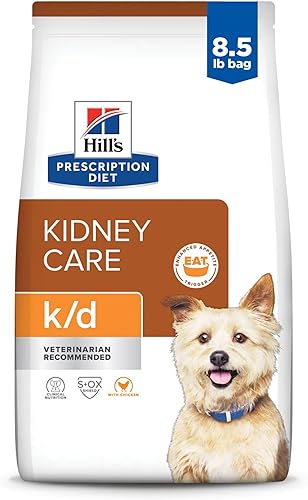 Best for Kidney Support Hill's Prescription Diet k/d Kidney Care Dry Dog Food, Chicken, 8.5 lb. Bag
$56.99
Best for Kidney Support Hill's Prescription Diet k/d Kidney Care Dry Dog Food, Chicken, 8.5 lb. Bag
$56.99
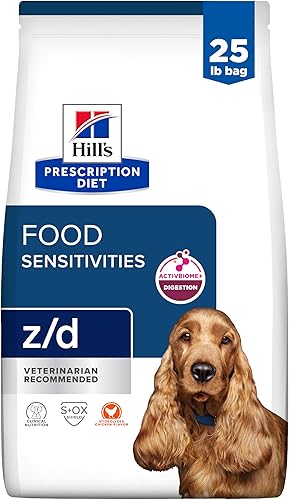 Best for Food Sensitivities and Skin Hill's Prescription Diet z/d Skin/Food Sensitivities Dry Dog Food, Hydrolyzed Chicken, 25 lb. Bag
$135.99
Best for Food Sensitivities and Skin Hill's Prescription Diet z/d Skin/Food Sensitivities Dry Dog Food, Hydrolyzed Chicken, 25 lb. Bag
$135.99
 Highest Rated Hill's Prescription Diet Gastrointestinal Biome Digestive/Fiber Care Dry Dog Food, Chicken, 27.5 lb. Bag
$144.99
Highest Rated Hill's Prescription Diet Gastrointestinal Biome Digestive/Fiber Care Dry Dog Food, Chicken, 27.5 lb. Bag
$144.99