Canned dog food is having a real moment, whether it is the whole meal, a topper over kibble, or a way to get more moisture into a dog that does not drink enough. With so many pate, loaf, stew, and gravy options on the shelf, the hardest part is telling a genuinely good recipe from a can that is mostly water and marketing. We built this list from actual Amazon sales and ratings data for canned dog food, not just ingredient lists, so you can see what real dog owners are buying and rebuying every month. Every pick below has a rating of at least 3.8 stars and real review counts behind it, and we cross-checked the guaranteed analysis, flavors, and life-stage guidance on each can. Below you will find picks for small dogs, seniors, puppies, sensitive stomachs, and tight budgets, plus a buying guide that explains what the label terms actually mean. As always, this is not veterinary advice, so check with your vet before making a big diet change, especially for puppies, seniors, or dogs with health conditions.
Short answer: If you want one can to start with, Cesar Classic Loaf in Sauce Variety Pack (B071J1BFTX, $35.94, 4.7 stars) is the best overall pick, moving 30,000 units a month, the highest demand in this entire category. If you are watching your budget, Purina ONE Classic Ground Variety Pack (B073PC2VH8, $11.72, 4.6 stars) delivers real chicken and beef entrees at the lowest price per can on this list.
Benefits Complete And Balanced Nutrition In A Convenient Meal
Best for Digestive Health
Breed size Small
Weight 84 Ounces
Cesar's Classic Loaf in Sauce Variety Pack is the single highest-demand canned dog food in this entire category, with 30,000 units bought last month and a 4.7-star rating across 4,600 ratings. The 36-count box of 3.5 oz easy-peel trays mixes six flavors, including grilled chicken, filet mignon, and porterhouse steak, so a dog gets variety without you opening a big can. Each tray is a complete and balanced meal built with added vitamins and minerals, priced at $35.94 for the case. The small, portion-controlled tray format is a big part of its popularity, since it is mess-free and easy to serve straight from the fridge.
Best for: Small dogs and picky eaters who want daily flavor variety in a mess-free tray
Pros
Highest monthly demand of any canned food we reviewed
Six flavors in one box keeps picky eaters interested
Easy-peel trays are simple to portion and serve
Complete and balanced nutrition with added vitamins and minerals
Strong 4.7-star rating across thousands of ratings
Cons
Tray portions are sized for small dogs, not a full meal for large breeds
Higher price per ounce than a large single can
Sauce-heavy texture may not suit dogs that prefer solid pate
Bottom line: The clear default pick for most owners, backed by the strongest sales numbers in this whole roundup.
Purina Beneful's IncrediBites Small Breed Variety Pack has the highest review count on this entire list, with 15,000 ratings and a 4.7-star average, plus 20,000 units bought last month. The 30-count case of 3 oz cans rotates real beef, chicken, and salmon in a chunk texture, and the formula is built with added vitamins, real meat, and no artificial flavors, colors, or preservatives. At $27.84 per case, it works out to a reasonable per-can cost for a small-breed-sized portion. The small can size makes it easy to serve a full portion to a smaller dog without leftovers going to waste.
Best for: Small breed dogs that need smaller, right-sized portions with flavor variety
Pros
Highest review count of any pick on this list at 15,000 ratings
Three real meat flavors in one case for variety
No artificial flavors, colors, or preservatives
Small can size is right-sized for smaller dogs
High-protein formula with added vitamins
Cons
Smaller cans mean more packaging waste per feeding for larger dogs
Chunk texture may not appeal to dogs that prefer smooth pate
Priced higher per ounce than large single-flavor cans
Bottom line: A trusted, heavily reviewed option built specifically around small-dog portions.
Cesar's Steak Lovers Variety Pack posts the highest rating in this roundup at 4.8 stars, backed by 11,300 ratings and 10,000 units bought last month. The 36-count box of 3.5 oz easy-peel trays is built around a real-meat steak theme, with minerals and vitamins added for complete nutrition, at $35.94 per case. Like the brand's other tray formats, it is aimed at small dogs and is marketed as a satisfying, complete meal rather than a topper. The combination of top-tier rating and strong demand makes it one of the safest bets in this list if rating quality is your priority.
Best for: Owners who want the single highest-rated option in this category
Pros
Highest star rating of any pick on this list at 4.8 stars
Backed by over 11,000 individual ratings
Easy-peel small trays are simple to serve
Complete nutrition with added minerals and vitamins
Consistently strong monthly demand
Cons
Tray size is built for small dogs, not large breeds
Costs more per ounce than large-format cans
Single steak-forward flavor theme, less variety than mixed-protein packs
Bottom line: If a top star rating matters most to you, this is the strongest number in the entire roundup.
Benefits Provides A Healthy, Balanced Diet For Dogs
Best for Nutrition
Breed size All
Weight 3 Pounds
Nutrish Rachael Ray's Savory Favorites Variety Pack is labeled for All Life Stages, meaning it is formulated to work across puppies, adults, and seniors in the same household. It carries a 4.5-star rating from 11,000 ratings and moved 10,000 units last month, all at a low $14.59 for six 8 oz tubs, among the more affordable options here. The grain-free recipe is built around a rotating set of savory flavors in a tub format that is easy to store and reseal between servings. It is a strong pick for multi-dog households that do not want to buy a separate case for every age group.
Best for: Multi-dog households feeding puppies, adults, and seniors from one shelf
Pros
Labeled for All Life Stages, useful in multi-age households
Grain-free formula
Low price at $14.59 for six tubs
Strong demand with 10,000 units bought last month
Resealable tub format is easy to store
Cons
4.5-star rating is solid but a step below the top picks on this list
Tub format holds less than a standard large can
All Life Stages formulas run calorie-dense, so portion carefully for less active adults
Bottom line: A budget-friendly, genuinely all-ages formula that simplifies feeding a mixed-age household.
Benefits Supports Muscle Growth And Overall Health In Adult Dogs
Best for Appetite Stimulation, Muscle Care
Breed size Medium
Weight 90 Ounces
Purina Beneful's Kitchen Creations Variety Pack rotates beef, chicken, and lamb in a gravy-forward texture that tends to appeal to dogs who need extra encouragement at mealtime. It holds a 4.7-star rating from 9,800 ratings and sold 10,000 units last month at $27.84 for a 30-can case of 3 oz portions. The recipe is built around muscle care and includes spinach as a named ingredient, positioned to support overall adult dog health. The smaller can size and saucy texture make it a popular topper as well as a standalone meal.
Best for: Dogs that need a stronger aroma and saucy texture to stay interested at mealtime
Pros
Strong gravy aroma appeals to picky or low-appetite dogs
Three protein varieties for rotation
4.7-star rating across nearly 10,000 ratings
Spinach and other named ingredients, not just filler
Small cans work well as a kibble topper
Cons
Gravy texture is messier to serve than pate
Smaller cans cost more per ounce than large-format options
Not ideal for dogs that prefer a firmer, spoonable texture
Bottom line: A go-to gravy pick when a dog needs extra encouragement to finish the bowl.
Benefits Nutritious, Tasty, And Versatile Feeding Option
Best for Digestive Health
Breed size Large
Weight 158.4 Ounces
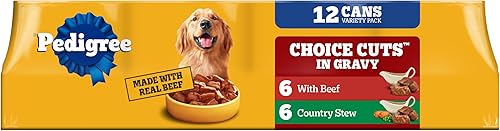
Pedigree's Choice Cuts Beef & Country Stew Multipack is one of the most recognizable names in the category, and the numbers back that up, with a 4.7-star rating, 7,900 ratings, and 10,000 units bought last month. The case includes twelve 13.2 oz cans labeled for all breed sizes, priced at $19.94, which keeps the per-can cost reasonable for a straightforward daily can. It is built as a versatile everyday feeding option rather than a specialty formula, with added minerals for basic nutritional support. For owners who want a no-frills, dependable can without paying premium prices, this is a solid everyday choice.
Best for: Owners who want a dependable, everyday can without a premium price tag
Pros
4.7-star rating with nearly 8,000 ratings behind it
Reasonable $19.94 price for a 12-can case
Labeled for all breed sizes
Strong, consistent monthly demand
Stew texture with visible meat pieces
Cons
Simpler ingredient profile than premium natural brands
Single beef and country stew flavor in this pack
Not formulated for specific health conditions
Bottom line: A trusted classic that earns its popularity with consistent quality at a fair price.
Benefits Nutritious, Supports Muscle Growth And Immune System
Best for Appetite Stimulation
Breed size All
Weight 13 Ounces
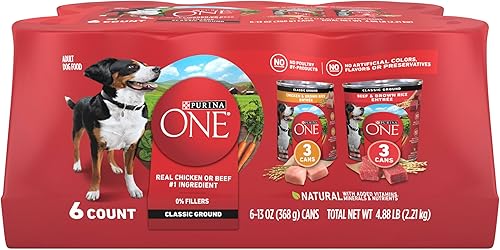
Purina ONE's Classic Ground Variety Pack is the least expensive pick on this list at $11.72 for six 13 oz cans, working out to under $2 per can, while still holding a 4.6-star rating from 6,000 ratings. It moved 10,000 units last month, rotating chicken and brown rice with beef and brown rice loaf-style recipes built to support muscle growth and immune health. The loaf texture is easy to portion and mixes smoothly with kibble if you are using it as a topper. For owners who want a genuinely low cost per feeding without dropping into unrated bargain brands, this is the strongest value pick here.
Best for: Budget-conscious owners who still want a well-rated, real-meat recipe
Pros
Lowest price per can of any pick on this list
4.6-star rating from 6,000 ratings
Two protein varieties, chicken and beef
Loaf texture is easy to portion and mix with kibble
High demand at 10,000 units bought last month
Cons
Smaller case size at six cans versus 12-can cases from other brands
Simpler ingredient profile than premium natural formulas
Loaf texture lacks the visible meat pieces some dogs prefer
Bottom line: The best per-can cost in this roundup without sacrificing rating or demand.
Blue Buffalo Homestyle Recipe Wet Dog Food Paté Variety Pack, Chicken Dinner & Beef Dinner with Garden Vegetables, Made with Natural Ingredients, 12.5-oz. Can (6 Count, 3 of Each)
Benefits Supports Overall Health And Lean Muscle Mass
Best for Immune Support
Breed size All
Weight 4.7 Pounds
Blue Buffalo's Homestyle Recipe Pate Variety Pack rotates chicken dinner and beef dinner with garden vegetables, made with natural ingredients and a named chicken protein source. It carries a 4.6-star rating from 3,100 ratings and sold 10,000 units last month at $17.58 for six 12.5 oz cans. The recipe is positioned around immune support and lean muscle mass, and the pate texture is smooth and easy for dogs of any age to eat. It is a solid middle-ground pick for owners who want natural ingredient positioning without paying prescription-diet prices.
Best for: Owners who want natural, named-ingredient nutrition at a mid-range price
Pros
Natural ingredients with named chicken protein
Two flavors, chicken and beef with garden vegetables
Smooth pate texture works for dogs of all ages
Strong 10,000 units bought last month
Reasonable $17.58 price for six cans
Cons
3,100 ratings is on the lower end of this list's review counts
Pate texture lacks visible meat chunks
Six-can case runs out faster for larger dogs
Bottom line: A well-rounded natural pate pick that balances ingredient quality and price.
Benefits Nutritious, Versatile, And Natural Ingredients For Dogs' Health
Best for Muscle Care
Breed size Medium
Weight 12.5 Ounces
Blue Buffalo's Blue's Stew Variety Pack is a natural grain-free recipe rotating hearty beef and country chicken stew in a thick, savory gravy, with flaxseed as a named ingredient supporting overall nutrition. It holds a 4.5-star rating from 2,800 ratings and moved 10,000 units last month at $17.58 for six 12.5 oz cans. The stew format has visible meat pieces in gravy, a texture many dogs find more appealing than smooth pate. It is labeled for all life stages, which adds flexibility if you are feeding more than one age group.
Best for: Owners specifically looking for a grain-free stew with visible meat pieces
Pros
Grain-free formula with flaxseed as a named ingredient
Stew texture with visible meat pieces in gravy
Labeled for all life stages
Strong demand at 10,000 units bought last month
Two flavors in one case for variety
Cons
4.5-star rating and 2,800 ratings, lighter review base than top picks
Grain-free is not automatically better for every dog
Six-can case size means more frequent reordering
Bottom line: A solid grain-free choice for dogs who prefer a saucier, chunkier stew texture.
Benefits Supports Digestive Health And Promotes Skin & Coat Health
Best for Stomach & Skin Sensitivity Support
Breed size Medium
Weight 354 Grams
Hill's Science Diet Adult Sensitive Stomach & Skin in Turkey & Rice Stew is built specifically to support digestive health and skin and coat condition, with carrot, peas, and spinach named on the label. It carries a 4.6-star rating from 5,600 ratings and sold 9,000 units last month, priced at $49.06 for a 12-can case of 12.5 oz cans. As a Hill's Science Diet formula, it sits at a premium price point compared to grocery-aisle brands, reflecting its more targeted formulation. This is formulated to help support dogs with a sensitive digestive system or skin and coat issues, and is not a substitute for veterinary treatment of an underlying condition.
Best for: Dogs with a history of stomach sensitivity or skin and coat issues
Pros
Formulated specifically for sensitive stomach and skin support
Named vegetable ingredients including carrot, peas, and spinach
Strong 4.6-star rating from 5,600 ratings
Trusted Hill's Science Diet formulation
Turkey and rice stew texture is gentle and easy to digest
Cons
Highest price per case on this list at $49.06
Premium positioning means a higher cost per feeding
Single flavor, no variety pack option in this listing
Bottom line: The go-to pick here when a dog's digestion or skin needs extra support, at a premium price.
Blue Buffalo Homestyle Recipe Chicken & Vegetable Dinner Paté Natural Wet Dog Food for Senior 7+ Dogs, Made with Natural Ingredients, Vitamins & Minerals, 12.5-oz. Can (12 Count)
Blue Buffalo's Homestyle Recipe Chicken & Vegetable Dinner Pate is formulated for senior dogs age 7 and up, with the label noting hip and joint support alongside natural ingredients, vitamins, and minerals. It has 8,600 ratings at a 4.6-star average, one of the largest review bases on this list, and moved 6,000 units last month at $35.28 for a 12-can case of 12.5 oz cans. The smooth pate texture is easy for older dogs with dental wear to eat comfortably. Joint support ingredients are formulated to help support mobility and are not a treatment for diagnosed joint disease, so talk to your vet if your senior dog has ongoing mobility concerns.
Best for: Senior dogs 7 and older who could use joint support and an easy-to-eat texture
Pros
Formulated specifically for senior dogs 7 and up
Includes hip and joint support ingredients
Large review base of 8,600 ratings at 4.6 stars
Smooth pate texture is easy for older dogs to eat
Made with natural ingredients, vitamins, and minerals
Cons
Priced higher than standard adult formulas at $35.28 per case
Joint support ingredients are not a substitute for vet-directed treatment
Single chicken and vegetable flavor in this case
Bottom line: A well-reviewed senior-specific formula worth considering as your dog ages.
Best for Brain Health, Bone Health, Skin And Coat Health, Immune Support
Breed size All
Weight 9.8 Pounds
Purina Pro Plan's Wet Puppy Food Pate in Classic Chicken and Rice is built for growing puppies, with the label calling out brain development, bone health, skin and coat health, and immune support. It holds a 4.6-star rating from 5,457 ratings, with 3,000 units bought last month, at $34.44 for a 12-can case of 13 oz cans. The pate texture is easy for young puppies to eat as they transition off softer weaning food, and the recipe is positioned as a complete meal rather than a topper. As with any puppy formula, confirm the feeding guide matches your puppy's current weight and check in with your vet as they grow.
Best for: Puppies transitioning to solid food who need growth-focused nutrition
Pros
Formulated specifically for growing puppies
Supports brain development, bone health, and immune function
4.6-star rating from over 5,400 ratings
Smooth pate texture is easy for young puppies to eat
From a well-established Purina Pro Plan line
Cons
Lower monthly demand than the top adult picks on this list
Priced higher than standard adult formulas
Single chicken and rice flavor in this listing
Bottom line: A trustworthy, growth-focused pick for puppy owners who want a dedicated puppy formula.
Canned dog food is typically 70 to 85 percent moisture, compared to roughly 10 percent in dry kibble, which makes it a simple way to boost water intake for dogs that do not drink much on their own. That extra moisture can also make meals easier to eat for dogs with dental issues, seniors with a fading appetite, or puppies just moving off of a mushy weaning diet. Many owners use canned food as a full meal, while others spoon a small amount over dry kibble as a topper to make an otherwise plain bowl more appealing. Either way, the stronger aroma of wet food tends to get a hesitant eater interested faster than dry kibble alone. It is worth remembering that canned food is calorie-dense for its weight in some cases and very dilute in others, so check the feeding guide on the can rather than assuming a standard scoop size. If your dog has a medical condition like kidney or urinary issues, a vet-recommended formula matters more than the wet-versus-dry question.
How to Read the Guaranteed Analysis and Ingredient List
Every can is required to list a guaranteed analysis showing minimum crude protein and fat, and maximum fiber and moisture, and this is the fastest way to compare two recipes on paper. Because wet food carries so much water weight, comparing the guaranteed analysis straight across cans can be misleading, so look at named protein sources near the top of the ingredient list rather than the percentages alone. Terms like chicken, beef, salmon, or turkey listed first are a good sign, while vague terms like meat by-product should not automatically disqualify a food, since many are legitimate nutrient sources, just less specific. Special ingredient callouts on the label, things like added vitamins, minerals, or named vegetables such as carrots, peas, or spinach, tell you the formula was built with a nutrient profile in mind, not just palatability. Look for an AAFCO nutritional adequacy statement confirming the food is complete and balanced for a specific life stage, since some canned foods are labeled for intermittent or supplemental feeding only. When in doubt about whether a recipe fits your dog's needs, your vet can help you interpret the label in the context of your dog's age, weight, and health history.
Loaf, Pate, Stew, or Gravy: Picking the Right Texture
Loaf and pate are smooth, dense textures that are easy to portion with a spoon and tend to hold together well in a bowl, which many owners find less messy for daily feeding. Stews and chunks in gravy have visible pieces of meat and vegetables in a thinner sauce, which often has a stronger smell that appeals to dogs who are picky or recovering their appetite. Small breed dogs and dogs with dental sensitivity often do best with pate or loaf, since there is nothing to chew, while larger dogs may enjoy the texture variety of a chunky stew. If your dog eats fast and tends to gulp, a thicker pate can slow things down slightly compared to a loose gravy. Texture preference is highly individual, so if your dog turns up their nose at one format, it does not mean canned food in general is a bad fit, just that this particular texture is not for them. Rotating between a couple of textures within the same brand can also help prevent a dog from getting bored with the same bowl every day.
Matching the Can to Life Stage and Breed Size
Puppy formulas are built with higher calorie density and protein to support rapid growth, and feeding an adult maintenance can to a growing puppy can shortchange those needs, so check the life stage on the label before you buy. Senior formulas often dial back calories slightly and may add ingredients aimed at joint or digestive support for aging dogs, though these are formulated to support general wellness, not to treat a diagnosed condition. All Life Stages formulas are built to meet the more demanding puppy growth standard, so they can work across ages in a multi-dog household, which is worth knowing if you feed a puppy and an adult from the same shelf. Breed size labeling, small, medium, or large, on some cans is more about kibble-adjacent texture and portioning guidance than a strict nutritional requirement, but it is still a useful cue for portion sizing. If your dog has a diagnosed medical condition such as kidney disease, urinary issues, or a chronic digestive disorder, a prescription or vet-recommended diet designed for that condition should take priority over a standard grocery-aisle can. When switching a puppy or senior to a new formula, do it gradually over several days and watch their stool and energy level for any changes.
Grain-Free Versus Grain-Inclusive: What the Label Actually Means
Grain-free canned food swaps out wheat, corn, and rice for other carbohydrate sources like potatoes, peas, or sweet potato, and it is often chosen for dogs with a suspected grain sensitivity, though true grain allergies in dogs are less common than many owners assume. Grain-inclusive formulas with rice or barley are frequently easier to digest for the average dog and are not inherently inferior, despite grain-free marketing that sometimes implies otherwise. If your dog has no diagnosed food sensitivity, the choice between grain-free and grain-inclusive often comes down to your dog's individual digestion and your own preference rather than a clear health advantage either way. If you suspect your dog has a genuine food allergy, a vet-guided elimination diet is a far more reliable way to identify the trigger than swapping brands on your own. Read the ingredient list either way, since a grain-free can still be full of fillers, and a grain-inclusive recipe can still lead with real named meat.
Storage, Portioning, and Getting the Most From Every Can
Once opened, canned dog food should generally be refrigerated and used within about three days, so buying the right can size for your dog matters as much as the recipe itself if you have a smaller dog that cannot finish a large can in one sitting. A silicone can lid or a simple layer of plastic wrap keeps the open can fresher in the fridge and stops it from picking up other smells. Cold food straight from the fridge can be less appealing to some dogs, so letting a portion sit at room temperature for a few minutes, or warming it very briefly, can boost the aroma and make mealtime more appealing. Follow the feeding guide on the can as a starting point and adjust based on your dog's body condition and activity level rather than feeding the same amount year-round. Variety packs are convenient for rotating flavors, but they usually cost more per ounce than a single-flavor case, so if your dog is not picky, a single-flavor case is the better long-term value. Always keep unopened cans in a cool, dry place and check the best-by date, since canned food does have a shelf life even before it is opened.
Common mistakes to avoid
Feeding a puppy or senior formula meant for a different life stage because the flavor or price looked appealing, rather than checking what the label actually says the food is formulated for.
Judging a recipe only by the front-of-can marketing words like natural or premium instead of reading the actual guaranteed analysis and ingredient list.
Switching from dry food to canned, or between canned brands, all at once instead of transitioning gradually over several days, which can trigger loose stool or vomiting.
Leaving an opened can out at room temperature for hours instead of refrigerating leftovers promptly and using them within a few days.
Overfeeding because a can looks like a small portion compared to a cup of kibble, without checking that wet food calorie density is often different from dry food.
Assuming grain-free or limited-ingredient automatically means healthier for every dog, when in reality most dogs do fine on grain-inclusive recipes and some do better on them.
Frequently asked questions
Is canned dog food as nutritionally complete as dry kibble?
Any canned food labeled complete and balanced for your dog's life stage meets the same nutritional adequacy standard as a complete dry kibble, just with more moisture and typically a shorter shelf life once opened. The main practical difference is cost per calorie, since you are paying for water weight in a can, and portion size, since wet food is usually fed in larger volume for the same calories. Some canned foods are labeled for supplemental or intermittent feeding only, so check the label if you plan to use it as your dog's sole diet rather than a topper.
How much canned dog food should I feed my dog?
Start with the feeding chart printed on the can, which is based on your dog's weight, then adjust up or down over a couple of weeks based on whether your dog is maintaining a healthy body condition. Active dogs, puppies, and underweight dogs often need more than the chart suggests, while less active or overweight dogs usually need less. If you are mixing canned food with dry kibble, reduce the kibble portion accordingly so you are not simply adding extra calories on top of a full ration. Your vet can help you calculate a more precise calorie target if your dog needs to gain or lose weight.
Can I mix canned and dry dog food in the same meal?
Yes, mixing a spoonful of canned food into dry kibble is a common and safe way to add moisture and aroma without switching your dog's whole diet, as long as you adjust total calories so you are not overfeeding. Many of the recipes on this list, including gravy and stew style cans, are popular specifically as toppers for this reason. Just make sure the combined feeding amount, canned plus dry, still lines up with your dog's daily calorie needs rather than feeding full portions of both.
How long does an opened can of dog food stay good in the fridge?
Most opened canned dog food should be covered, refrigerated, and used within about three days for freshness and safety, though you should always check the specific brand's guidance on the can or their website. If you regularly cannot finish a large can within that window, consider a smaller can size or a variety pack with individual cans or trays instead. Discard any leftover food that smells off, has changed color, or has been left unrefrigerated for more than a couple of hours.
Is grain-free canned food better for dogs with food allergies?
Not necessarily. True grain allergies are relatively uncommon in dogs, and the most frequent food allergy triggers are actually protein sources like beef, chicken, or dairy rather than grains. If you suspect a food allergy, a vet-guided elimination diet is a much more reliable way to identify the actual trigger than simply switching to a grain-free label on your own. Grain-free can still be a reasonable choice for a dog that tolerates it well, but it should not be assumed to be the automatic fix for digestive or skin issues.
Should I talk to my vet before switching my dog to canned food?
For a healthy adult dog without a diagnosed condition, adding or switching to a well-reviewed complete and balanced canned food is generally low risk if you transition gradually. For puppies, senior dogs, or any dog with a known health condition such as kidney disease, urinary issues, or a sensitive digestive system, it is worth checking with your vet first, since some of those conditions call for a specific prescription or therapeutic diet. This article is meant to help you compare popular options and is not a substitute for individualized veterinary advice.
Why do variety packs cost more per ounce than single-flavor cases?
Variety packs are typically packaged in smaller individual trays or cans so a dog gets several different flavors instead of one large can, and that smaller packaging plus the production complexity of multiple recipes usually adds cost per ounce. If your dog is not a picky eater and does well on one flavor, a single-flavor case of larger cans is usually the better long-term value, while a variety pack is worth the premium for a dog that gets bored of the same flavor quickly.
Final recommendation
There is no single best canned dog food for every dog, but the picks above cover the situations most owners actually run into: an easy everyday favorite, a small-breed option, a tight budget, a sensitive stomach, and specific life stages like puppies and seniors. Start with whichever pick matches your dog's age, size, and any known sensitivities, then watch how their appetite, stool, and coat respond over the first couple of weeks. If your dog has a diagnosed health condition, loop your vet in before making a switch, since some conditions call for a specific therapeutic formula rather than a grocery-aisle pick. Every recipe here has real demand and a rating of at least 3.8 stars behind it, so you are starting from a genuinely well-reviewed shortlist rather than guessing from hundreds of options.
We use necessary cookies to keep the site working. With your permission, we also use functional, analytics, and marketing cookies. Read our Cookie Policy.
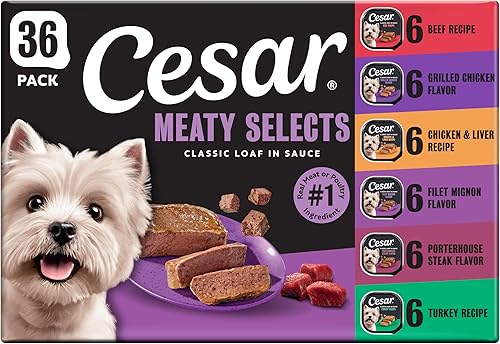 Best Overall Cesar Wet Dog Food Classic Loaf in Sauce Grilled Chicken, Filet Mignon, Porterhouse Steak, Beef, Chicken & Liver and Turkey Variety Pack 3.5 oz. Easy Peel Trays (36 Count, Pack of 1)
$35.94
Best Overall Cesar Wet Dog Food Classic Loaf in Sauce Grilled Chicken, Filet Mignon, Porterhouse Steak, Beef, Chicken & Liver and Turkey Variety Pack 3.5 oz. Easy Peel Trays (36 Count, Pack of 1)
$35.94
 Best for Small Breeds Beneful Purina Small Breed Wet Dog Food Variety Pack, IncrediBites With Real Beef, Chicken and Salmon - (Pack of 30) 3 Oz. Cans
$27.84
Best for Small Breeds Beneful Purina Small Breed Wet Dog Food Variety Pack, IncrediBites With Real Beef, Chicken and Salmon - (Pack of 30) 3 Oz. Cans
$27.84
 Highest Rated Cesar Adult Wet Dog Food Steak Lovers Variety Pack with Real Meat, 3.5 oz. Easy Peel Trays, 36 Count (Pack of 1)
$35.94
Highest Rated Cesar Adult Wet Dog Food Steak Lovers Variety Pack with Real Meat, 3.5 oz. Easy Peel Trays, 36 Count (Pack of 1)
$35.94
 Best for All Life Stages Nutrish Rachael Ray Savory Favorites Wet Dog Food Variety Pack, 8 oz. Tubs (Pack of 6)
$14.59
Best for All Life Stages Nutrish Rachael Ray Savory Favorites Wet Dog Food Variety Pack, 8 oz. Tubs (Pack of 6)
$14.59
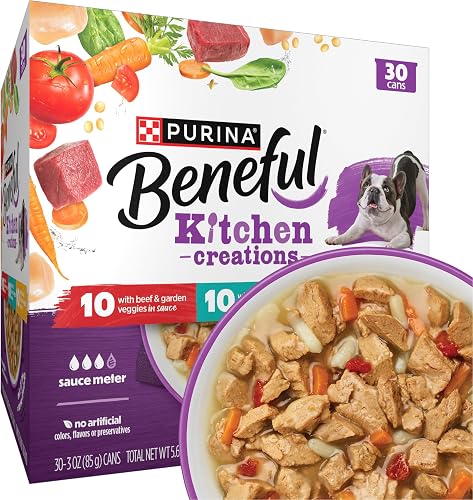 Best Gravy Recipe Purina Beneful Kitchen Creations With Beef, Chicken, or Lamb Wet Dog Food Variety Pack - (Pack of 30) 3 oz. Cans
$27.84
Best Gravy Recipe Purina Beneful Kitchen Creations With Beef, Chicken, or Lamb Wet Dog Food Variety Pack - (Pack of 30) 3 oz. Cans
$27.84